Physical AI Transforms Healthcare with Real-World Applications
For years, hospitals have been integrating artificial intelligence into their systems, primarily in digital forms like ambient documentation, clinical summarization, and administrative automation. While these tools have streamlined workflows, a new wave of AI is emerging—one that steps out of the computer monitor and into the physical world.
AI Takes a Physical Form
This new frontier, known as physical AI, combines artificial intelligence with robotics, sensors, and autonomous systems. Unlike its digital counterparts, physical AI can perceive its surroundings, make decisions, and take actions in the real world. Imagine robots transporting medications, assisting in surgeries, or monitoring patients—all while adapting to changing conditions.
While robotic-assisted surgery is already established, physical AI extends far beyond robotics. It represents a shift from AI as a passive advisor to an active participant in healthcare delivery. This evolution raises new questions about safety, human oversight, and liability when machines interact directly with patients and clinicians.
From Information to Action
This distinction demands a higher level of contextual understanding and safety considerations compared to generative AI.
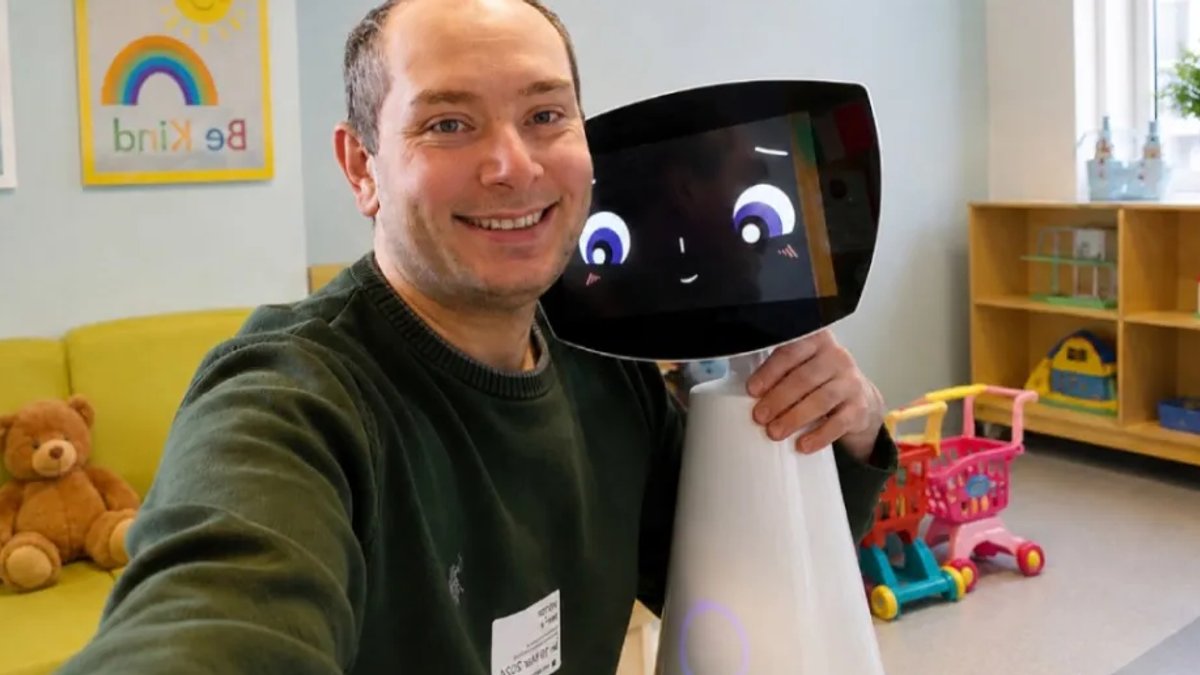
Expper’s Robin, a socially assistive robot deployed in pediatric and senior care, exemplifies this. Robin must constantly observe human reactions, adapt its behavior, and recognize when to defer to human control. This level of social intelligence is key for physical AI in healthcare settings.
Dr. Filippo Filicori, a surgical innovation expert at Northwell Health, emphasizes the closed loop nature of physical AI: perception, planning, action, and adjustment. This cycle allows physical AI to operate safely and effectively in complex clinical environments.
Rather than replacing existing AI tools, physical AI is seen as the next stage in their evolution.
While humanoid robots capture the imagination, experts predict initial successes will come from narrowly defined, repetitive tasks in controlled environments. Think supply delivery, equipment monitoring, and routine non-clinical requests. These applications offer measurable operational benefits with lower clinical risk, making them attractive starting points for hospitals.
Related Post: Elevance Requires Hospitals to Specify Care Location
In the long term, physical AI’s impact is expected to extend deeper into clinical care, particularly in areas like surgery where robotic platforms already generate vast amounts of data. However, the focus will likely be on task-specific autonomy rather than fully autonomous procedures.
Near-Term Opportunities in Operational Efficiency
Healthcare leaders predict that the initial focus of physical AI will be on operational tasks, offering significant efficiency gains. Davit Martirosyan highlights bounded, repetitive tasks as the largest near-term opportunity, rather than attempting to create fully autonomous robotic doctors.
These tasks, while not directly clinical, consume substantial staff time and can be automated within controlled environments, reducing operational burdens and freeing up healthcare professionals for more complex work.
Long-Term Impact on Clinical Care
While logistics and operational tasks may lead the way, the long-term potential of physical AI lies in its ability to enhance clinical care. Dr. Filippo Filicori identifies surgery as a prime candidate due to the existing infrastructure of robotic platforms, high-resolution video, and structured workflows.
This approach ensures that physical AI complements human expertise, providing assistance in specific tasks within a procedure rather than replacing the surgeon entirely.
David Niewolny emphasizes the role of physical AI in addressing the workforce gap in healthcare. By automating repetitive tasks, physical AI can extend access to care, increase the capacity of care teams, and allow clinicians to focus on patient needs, oversight, and decision-making.
Complementary AI Technologies
David Niewolny of NVIDIA views generative and physical AI as complementary, not competing. Generative models aid physical systems in understanding instructions and complex situations, while world models simulate potential outcomes.
Physical AI bridges the gap between these capabilities and real-world actions, creating an intelligent ecosystem where both technologies work together to enhance functionality and decision-making processes.


